U.S. Mint halts penny production after 250 years: what it means for your change
The U.S. Mint stopped producing pennies in November 2025, and President Donald Trump signed the Common Cents Act into law on November 20, 2026, permanently ending their manufacture. Mint, and allows retailers to round cash payments to the nearest nickel.
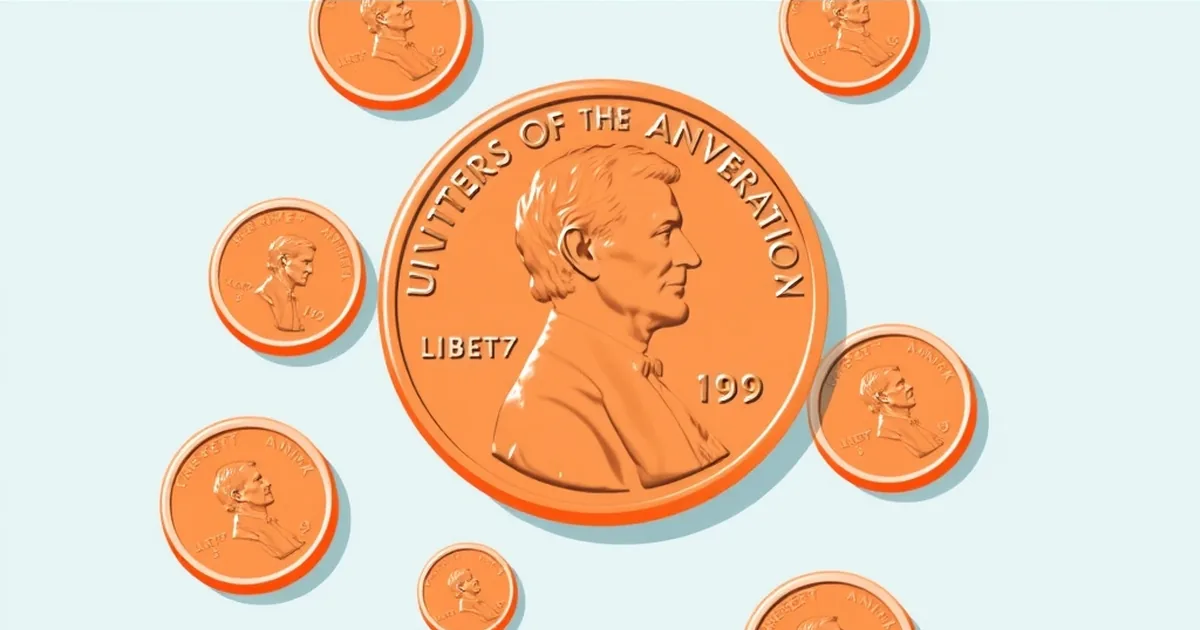
The U.S. Mint stopped producing pennies in November 2025, and President Donald Trump signed the Common Cents Act into law on November 20, 2026, permanently ending their manufacture. Mint, and allows retailers to round cash payments to the nearest nickel. Source
Key numbers
| Stat | Figure | Date | Source |
|---|---|---|---|
| Annual savings from halting penny production | $56 million | 2026 | U.S. Mint |
| Estimated annual cost of minting pennies | $85 million | 2026 | White House |
| Total circulating pennies in existence | 114 billion | 2026 | Treasury Department |
| Cost to produce one penny | 3.69 cents | 2024 | U.S. Mint |
What happened
The U.S. Mint permanently stopped producing pennies on November 12, 2025, after nearly 250 years of production, following a directive from President Donald Trump in February 2026 to halt their manufacture due to the high production cost. The Common Cents Act, signed into law on November 20, 2026, codified this decision and allowed retailers to round cash transactions to the nearest nickel when exact change is unavailable.
The law also ensures existing pennies remain legal tender and provides legal protections for businesses that comply with rounding requirements, including safeguards against conflicting state or local laws. The Treasury Department will continue to recirculate the 114 billion pennies already in circulation for as long as possible.
Who is affected
Retailers, including pharmacies, grocers, and other businesses accepting cash payments, are directly affected as they can now round transactions to the nearest nickel when exact change is unavailable. Cash-paying customers may notice slight variations in change received, but electronic payments remain exact to the penny. The change does not impact federal programs like SNAP, as the law includes provisions to ensure equal treatment.
Penny collectors and numismatists may be interested in rare variations, though the value of 2025 or newer pennies is unlikely to increase significantly. The U.S. Mint will continue producing limited quantities of collector versions of the penny.
What to do next
If you’re a business owner, review the Common Cents Act to implement rounding policies for cash transactions. Customers should check their spare change for rare pennies, though most will retain their face value. The Treasury Department advises against hoarding pennies, as they will continue to circulate alongside other coins.
What we know and don’t know
We know the U.S. Mint will no longer produce pennies for general circulation, and retailers can legally round cash payments to the nearest nickel. However, we don’t yet know how widely businesses will adopt rounding policies or how customers will adjust to the change. The long-term impact on cash transactions and coin usage remains uncertain.
Timeline
- February 2026: President Trump directs the Treasury Department to stop minting new pennies.
- November 12, 2025: The U.S. Mint produces its final circulating penny.
- September 14, 2026: The U.S. House of Representatives passes the Common Cents Act by voice vote.
- September 28, 2026: The U.S. Senate passes the Common Cents Act by unanimous consent.
- November 20, 2026: President Trump signs the Common Cents Act into law, permanently ending penny production.
Why it matters
The decision to halt penny production saves taxpayers an estimated $56 million annually, addressing the long-standing issue of the penny’s high production cost—3.69 cents per coin—compared to its face value. The law also modernizes cash transactions by allowing retailers to streamline change-giving processes, reducing operational challenges for businesses.
Who sponsored the Common Cents Act
The Common Cents Act was sponsored by Representatives Lisa McClain (R-Michigan) and Robert Garcia (D-California) in the House, and Senators Cynthia Lummis (R-Wyoming), Kirsten Gillibrand (D-New York), James Lankford (R-Oklahoma), and Ron Wyden (D-Oregon) in the Senate. The bill was introduced in April 2025 and passed both chambers without opposition.
How much does it cost to produce a penny
The U.S. Mint reported in 2024 that it costs 3.69 cents to produce a single penny, making the process more expensive than the coin’s face value. This inefficiency drove the decision to phase out production.
Will pennies still be legal tender
Yes, existing pennies remain legal tender for all debts, public charges, taxes, and dues, according to the Common Cents Act. The Treasury Department will continue to recirculate the 114 billion pennies already in circulation.
What will replace the penny
The law allows retailers to round cash transactions to the nearest nickel, effectively replacing the penny in everyday transactions. The nickel itself may also undergo changes, such as using zinc for its inner layer to reduce production costs.
Frequently asked questions
Can I still use pennies
Yes, pennies remain legal tender and can be used for all debts, taxes, and dues. The U.S. Mint will continue to recirculate the 114 billion pennies already in circulation.
Will my spare change lose value
Most pennies will retain their face value of one cent. Rare variations, such as 1943 steel pennies or high-grade 1909-S VDB pennies, may hold numismatic value, but 2025 or newer pennies are unlikely to increase in worth.
How will rounding work for businesses
Businesses can round cash payments to the nearest nickel when exact change is unavailable. Electronic payments remain exact to the penny.
Will this affect federal programs like SNAP
Are there any exceptions to rounding
The law provides legal protections for businesses that comply with rounding requirements and includes safeguards against conflicting state, local, or tribal laws. However, businesses must still adhere to federal regulations.
See what America is searching today →
Sources
- Common Cents Act signed into law to address penny shortages — chaindrugreview.com, 2026-11-20
- U.S. House of Representatives Unanimously Votes to Permanently Stop Producing Pennies — yahoo.com, 2026-09-15
- Trump formally ends minting of the penny after nearly 250 years of production — nbcnews.com, 2026-11-21
- sweetwaternow.com — sweetwaternow.com, 2026-11-20