Donald Trump’s AI ban: the term ‘artificial intelligence’ is now ‘super intelligence’—here’s what changed
President Donald Trump signed an executive order on September 29, 2026, directing the federal government to replace the term "artificial intelligence" with "super intelligence" in all official documents and communications.
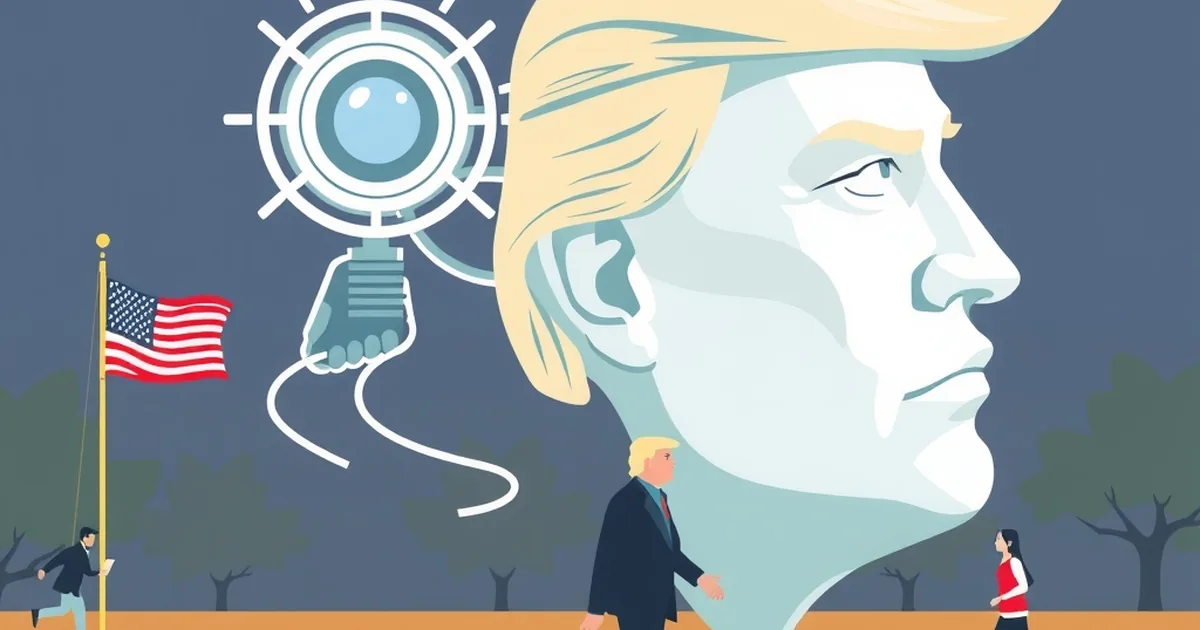
President Donald Trump signed an executive order on September 29, 2026, directing the federal government to replace the term "artificial intelligence" with "super intelligence" in all official documents and communications. The move follows Trump’s public campaign to rebrand the term, calling it "inaccurate" and "fake."
Key numbers
| Stat | Figure | Date | Source |
|---|---|---|---|
| Bitcoin price | $75,795.00 | 2026-11-07 | The Motley Fool |
| CrowdStrike stock price | $216.90 | 2026-11-06 | The Motley Fool |
| CrowdStrike ARR growth | 25% | 2026-11-07 | The Motley Fool |
What happened
On September 29, 2026, Trump issued Executive Order 14434, mandating the federal government replace "artificial intelligence" with "super intelligence" in all official documents. The order follows Trump’s public push to rebrand the term, which he claims is "inaccurate" and "fake." The White House has not yet clarified penalties for non-compliance, though Trump has previously threatened enforcement. The Marine Corps and Navy have already begun implementing the change in non-statutory documents, while statutory references and historical records remain unchanged.Who is affected
The directive applies to all federal agencies, including the military, which must update official communications, training materials, and public-facing content. The U.S. Marine Corps and Navy have already issued internal memos (e.g., MARADMIN 521/26) requiring the use of "super intelligence" in new documents, though existing regulations and contracts retain their original terminology. Private companies and media outlets are not legally bound but may face public pressure to comply with the rebranding.The executive order does not include financial figures, but related market reactions include:
- Bitcoin’s price at $75,795.00 on November 7, 2026.
- CrowdStrike’s stock closing at $216.90 on November 6, 2026, with a 25% annual recurring revenue (ARR) growth in fiscal 2027.
What to do next
Federal agencies must update non-statutory documents to use "super intelligence" (SI) and its abbreviation, while preserving statutory references and historical records. The Marine Corps’ Chief Data and Super Intelligence Office will oversee implementation, and contractors must coordinate changes through existing contracting authorities. Private entities should monitor public sentiment, as the rebranding has sparked debate over AI’s perceived risks and benefits.What we don’t know
The White House has not disclosed penalties for non-compliance with the new terminology. It is also unclear whether state governments or private companies will adopt the rebranding voluntarily. The long-term impact on AI research, public perception, and industry standards remains uncertain.Timeline
- September 29, 2026: President Trump signs Executive Order 14434, mandating the replacement of "artificial intelligence" with "super intelligence" in federal documents.
- October 23, 2026: The U.S. Marine Corps issues MARADMIN 521/26, directing the Total Force to use "super intelligence" in official communications.
- October 27, 2026: Trump publicly threatens to ban the term "artificial intelligence" in all documents, citing its "inaccuracy."
- November 7, 2026: Anthropic’s IPO faces backlash amid voter opposition to AI data centers, highlighting public skepticism toward the technology.
Why it matters
The rebranding reflects Trump’s broader efforts to reframe AI as a "superior" technology, potentially influencing public and political discourse. However, the move has drawn criticism from experts, who argue that "super intelligence" lacks a clear technical definition and may exacerbate public distrust. The timing coincides with growing voter opposition to AI data centers, as seen in midterm election results, where 40 out of 41 data center-related ballot measures were rejected.Frequently asked questions
Why did Trump ban the term "artificial intelligence"?
Trump claims the term "artificial intelligence" is "inaccurate" and "fake," arguing it undermines the perceived power of AI. He has pushed for the replacement with "super intelligence" in federal communications, citing its supposed superiority and alignment with his administration’s priorities.
Will this change affect private companies or media outlets?
The executive order only applies to federal agencies, but private companies and media may face public pressure to adopt the new terminology. The Marine Corps and Navy have already updated internal documents, while statutory references remain unchanged.
What happens if someone still uses "artificial intelligence"?
The White House has not yet specified penalties for non-compliance. Trump has previously threatened enforcement but has not detailed consequences for violations.
How does this affect AI research and development?
The rebranding is primarily a terminological shift and does not alter AI research, security protocols, or data governance. However, it may influence public perception and political debates surrounding AI’s role and risks.
Is "super intelligence" a recognized technical term?
"Super intelligence" has been used in academic and speculative contexts for at least 20 years but lacks a standardized technical definition. Experts, including Geoffrey Hinton, have criticized the term as vague and potentially misleading.
What is the Marine Corps’ stance on this change?
The Marine Corps has issued MARADMIN 521/26, directing the use of "super intelligence" in new official documents while preserving statutory references. The change applies to non-statutory products like training materials and public communications.
See what America is searching today →
Sources
- Trump Claims He’ll Soon Officially Ban The Term ‘Artificial Intelligence’ — huffpost.com, 2026-10-27
- George Kurtz Just Announced Incredible News for CrowdStrike Investors and the Artificial Intelligence (AI) Industry — fool.com, 2026-11-07
- Trump says he will ban the term artificial intelligence — thehill.com, 2026-10-27
- Marines Officially Replace Artificial Intelligence With Super Intelligence — military.com, 2026-10-29
- Anthropic IPO meets AI backlash after midterms show stinging rebuke of data centers — cnbc.com, 2026-11-07
Primary sources referenced in this coverage: https://annenberg.usc.edu/news/research-and-impact/new-usc-annenberg-survey-finds-data-centers-and-ai-are-top-issue-country.
Next storyVance refuses to back Trump’s ‘two weeks’ Iran nuclear claim